
What website is this?
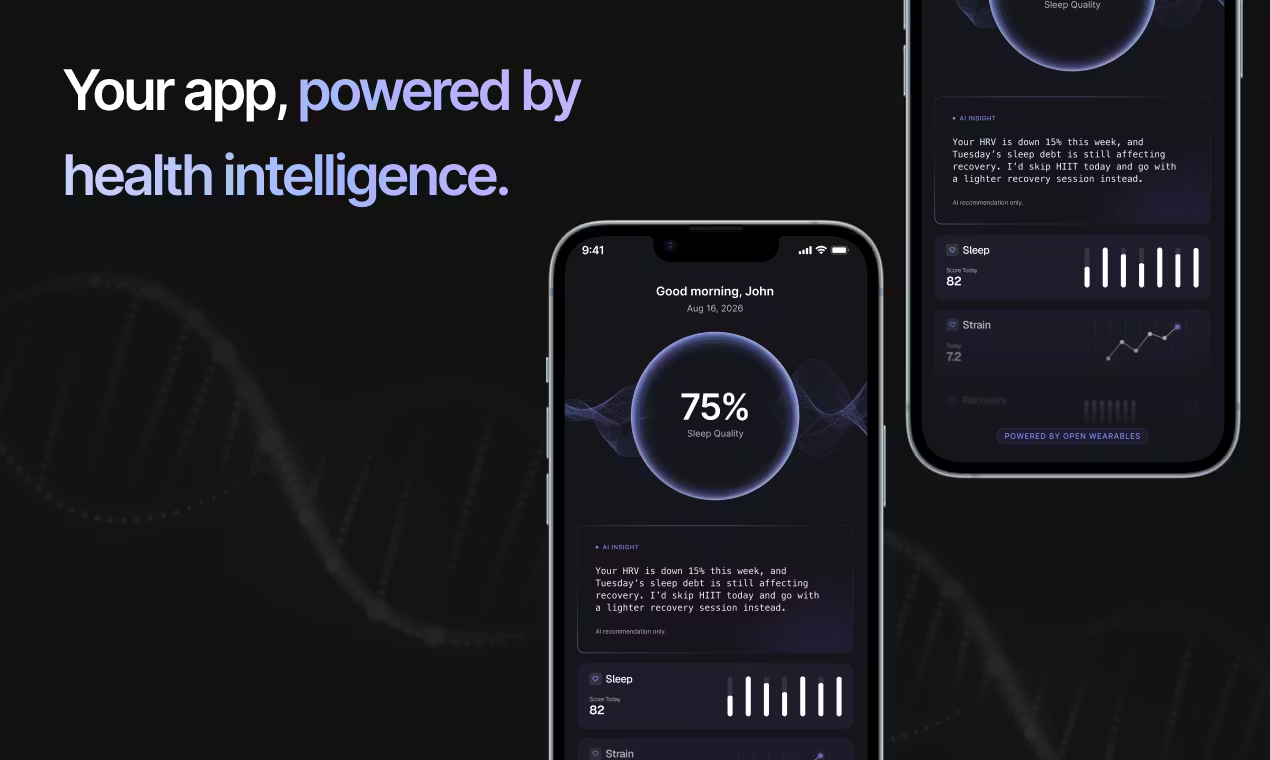
Open Wearables (https://openwearables.io/) is an MIT-licensed, self-hostable wearable health intelligence stack: it focuses on a unified multi-vendor data model and open health scoring (sleep, recovery, load, stress, HRV, VO₂, etc.), plus a Health AI Engine for trends/anomalies/cross-metric analysis, and MCP to pass structured context to large language models. You can also configure coaching profiles by scenario. Compared with “cloud black-box APIs,” it stresses visible source and algorithms and data residency under your control; adoption depends on whether you accept self-hosted deployment and integration work.
Key Features
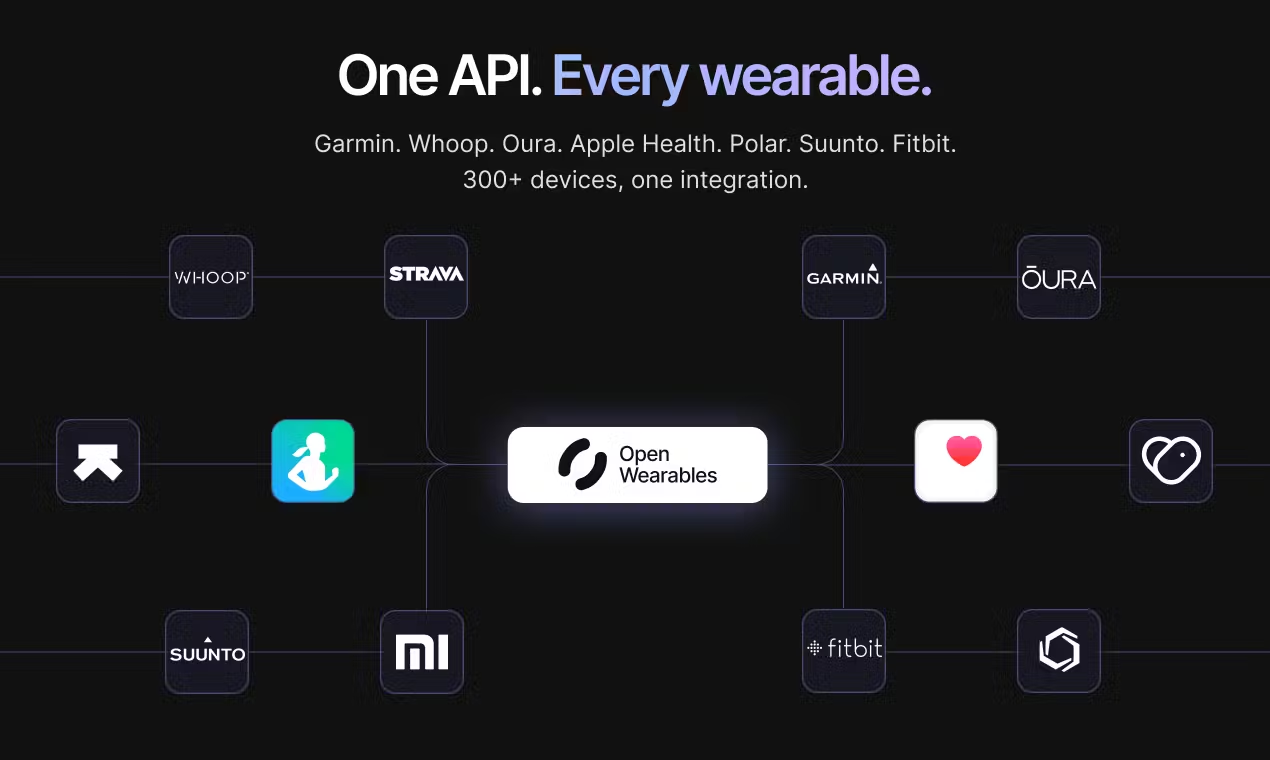
- Unified ingestion, normalization, and deduplication for multi-vendor wearable data (sync runs in your self-hosted environment)
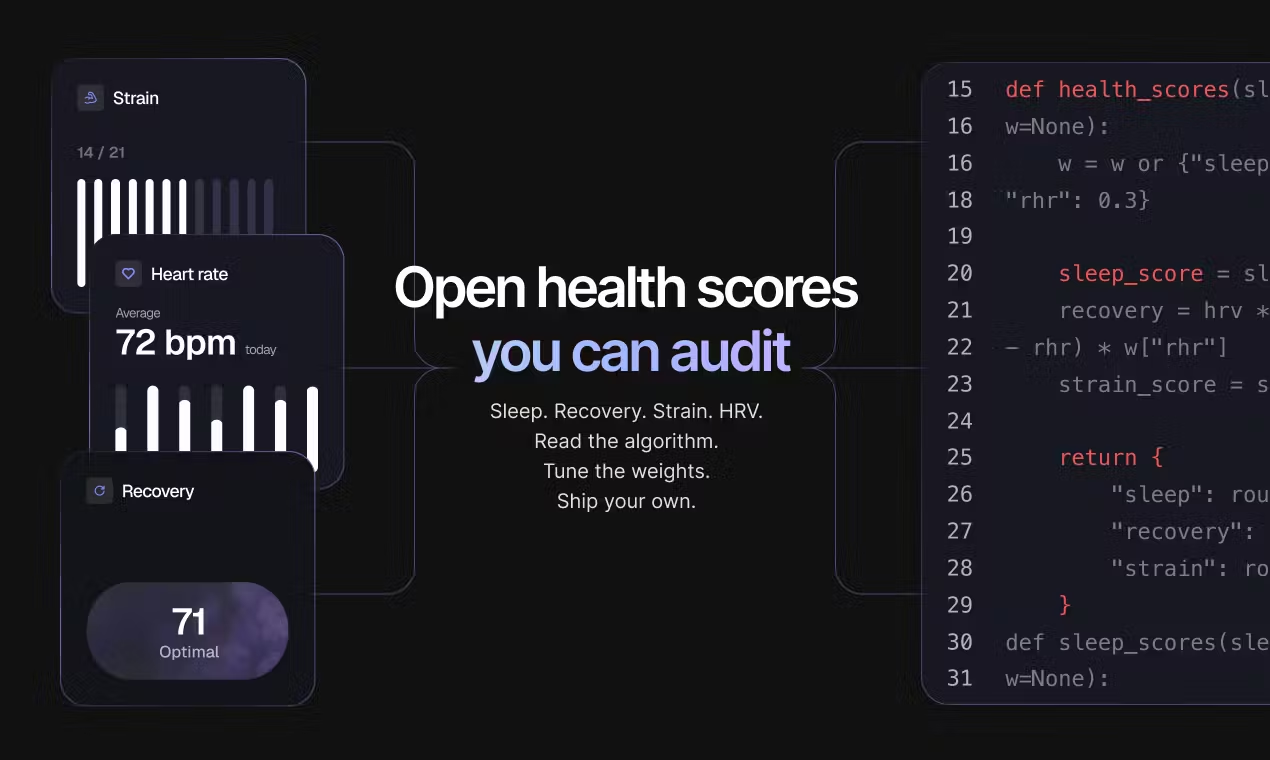
- Open health scoring for sleep, recovery, load, stress, HRV, VO₂, etc., with tunable thresholds and population assumptions
- Health AI Engine: trends, anomalies, baseline comparisons, cross-metric patterns, and a recommendation framework
- Structured health context exposed to LLM workflows via MCP
- Coaching profiles: the same data and scores with different domain logic for outputs
- OAuth connections, sync status, API keys, and developer portal capabilities (per official documentation)
Use Cases
- Health/fitness product teams need training and recovery guidance in-app, want consistent metrics across Whoop, Garmin, Apple Health, etc., and prefer traceable scoring rationale.
- Corporate wellness programs want sleep, stress, and recovery signals aggregated on owned infrastructure for organization-level monitoring (scope depends on internal policy and deployment choices).
- Longevity and nutrition digital services link lifestyle logs, supplements, and long-term wearable trends and rely on continuous capture plus tunable scoring.
- Research or clinical engineering integrations weigh algorithm transparency and data not leaving the environment against the open repository and compliance-oriented deployment claims.
- Indie developers bring the stack up locally with Docker to validate APIs and the portal; timing varies with credentials and environment setup.
Who is it for?
- Engineering teams embedding wearable capabilities who prefer self-hosting and source control.
- Data or algorithm owners who need scoring logic to be readable, auditable, and threshold-tunable.
- Developers with existing LLM flows who want to wire health context through MCP into reasoning pipelines.
- May not be a fit: organizations that will not own ops costs and only accept hosted black-box APIs, or teams that only need minimal charts and do not plan a scoring-and-guidance pipeline.
How It Compares to Similar Tools?
If you are comparing subscription-priced wearable data SaaS, Open Wearables emphasizes open-source delivery and self-hosting; if you are weighing build-from-scratch ingestion—modeling—apps, it bundles unified ingestion, scoring, and a Health AI reasoning layer to reduce glue work. If your priority is no-code template sites or a single-brand closed ecosystem, the integration story may differ—verify features and deployment docs on the official site.
Pricing Details
- Open-source/developer path: MIT-licensed source on GitHub; the homepage comparison narrative stresses no subscription-style per-user fees, while real costs cover your servers, operations, and OAuth setup.
- Enterprise path: pages mention HIPAA-related infrastructure setup, SLA, BAA (available as applicable), custom integrations, and domain-tuned scoring—pricing and contract terms follow the latest enterprise / custom deployment pages and commercial discussions.
- Support channels: Discord, GitHub Discussions, etc., per official guidance.
FAQs
Q: Do I have to self-host?
A: The main line is self-hosted open source; enterprises can buy tailored deployment and support—see enterprise pages for details.
Q: Which devices or data sources are supported?
A: The homepage lists examples such as Apple Health, Whoop, Oura, Samsung Health; the full list and steps are in the docs.
Q: Can I inspect how health scores are implemented?
A: The official narrative is open algorithms; thresholds can be tuned by cohort—exact knobs depend on the implementation.
Q: How does it work with Claude, ChatGPT, or similar models?
A: It offers MCP integration; it is not the same as bundling a specific model—engineering limits are in the docs.
Q: Can outputs be treated as medical diagnoses?
A: It behaves more like monitoring, scoring, and a guidance framework; medical use requires meeting regulatory and process requirements on your side.


