
What website is this?
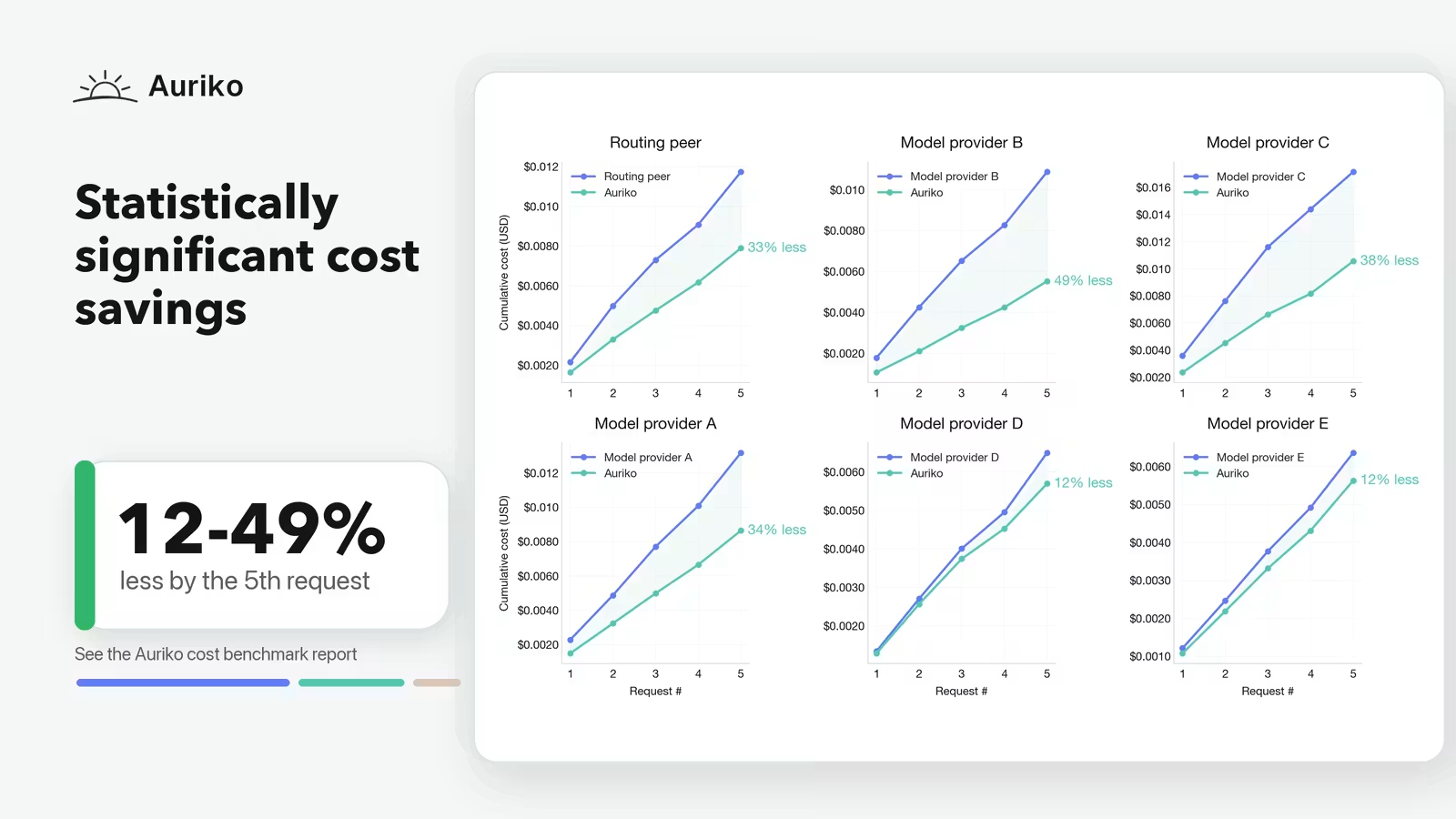
Auriko is a production-oriented LLM inference routing layer that reaches OpenAI, Anthropic, Google AI Studio, DeepSeek, and other providers through one OpenAI-compatible API. It models prompt-caching rules, each provider’s list price, and your traffic patterns, then picks a lower-cost path per request; the platform adds zero markup on provider prices, and token usage is billed at list rates separately. Teams already on LangChain or the Vercel AI SDK often switch models by changing base_url and routing parameters instead of maintaining multiple client stacks.
Key Features
- Call every model from multiple LLM vendors through one OpenAI-compatible endpoint
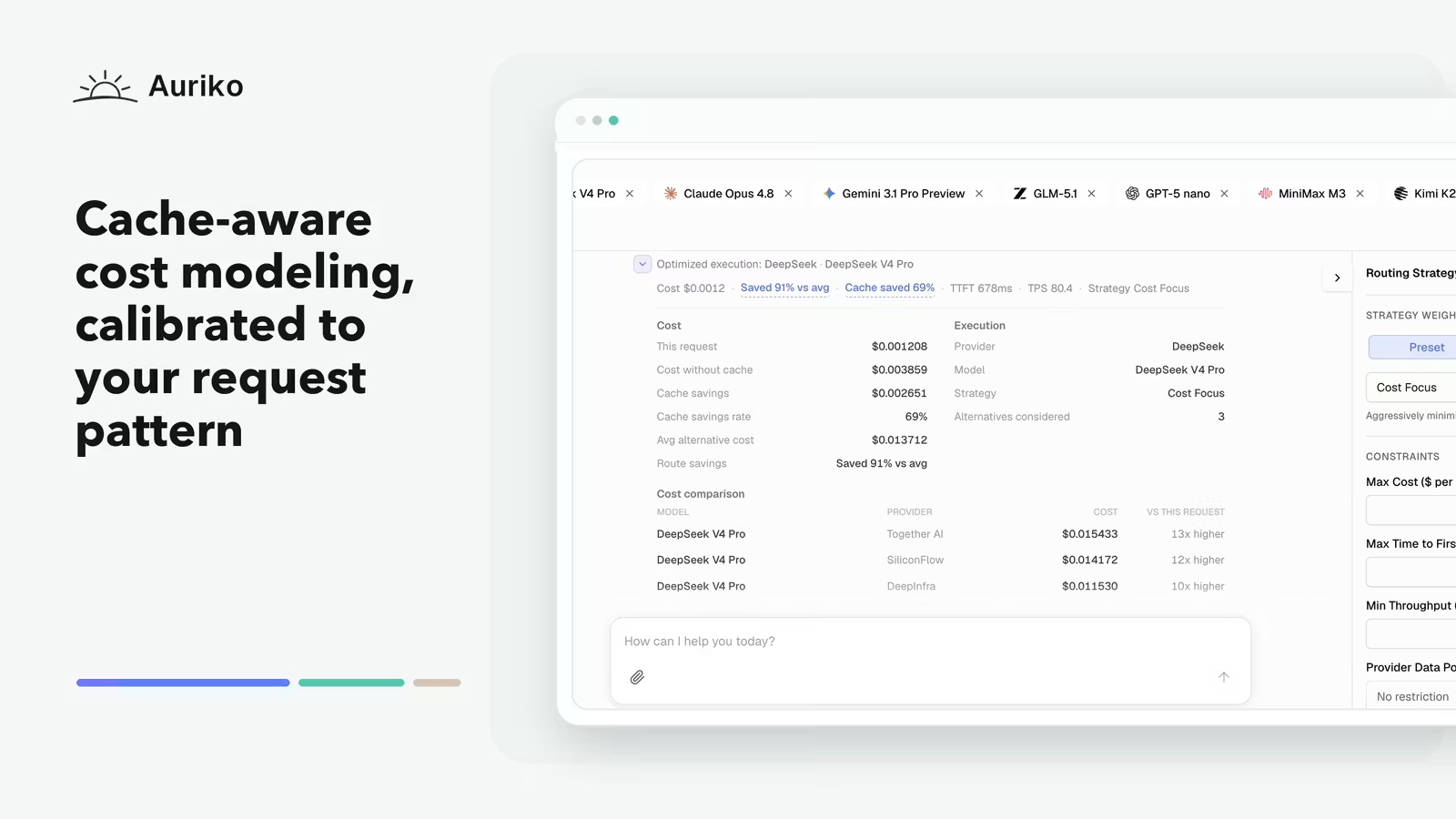
- Model costs with prompt caching and workload traits, then route with cache-aware logic
- Configure routing and fallback by cost, TTFT, throughput, or custom constraints
- Orchestrate API keys and rate limits with BYOK, platform keys, or a hybrid mix
- Fail over to backup providers on errors, with global edge routing for lower latency
- Set budget caps and spend alerts at workspace or API-key level
Use Cases
- AI product teams rotate GPT, Claude, and DeepSeek in staging to compare quality and unit cost before picking a production default
- Platform engineers attach multiple provider keys to one gateway for load balancing and to avoid single-key RPM ceilings
- Cost-sensitive production traffic runs cost-focus routing under TTFT and price caps on cache-friendlier paths
- Apps on the Vercel AI SDK point base_url at Auriko and keep existing chat call shapes
- Enterprises needing SSO, custom SLAs, and PO billing onboard through the Enterprise plan for unified routing and policy control
Who is it for?
- Engineering and platform teams using several LLMs who want config-driven model switches, not SDK rewrites
- Product owners with large monthly token volume who need workspace-level spend tracking and compression
- Infrastructure engineers with existing provider keys who want centralized failover and rate orchestration
- Personal scripts fixed on one model with very low daily volume (Free tier works, but routing adds little value)
- Users expecting an all-in monthly fee for all tokens and unwilling to pay provider list prices on top (pay-as-you-go applies)
How It Compares to Similar Tools?
Versus calling each vendor SDK directly, Auriko bundles multi-model switching, cache-aware routing, and automatic failover in one gateway—the main learning curve is routing config. Compared with open proxies like LiteLLM, it stresses live provider health/cache signals and quantitative cost modeling with published zero markup; a home-grown gateway is flexible but needs your own monitoring and switch logic. If you only need one stable provider at small volume, direct calls are often simpler; when you mix vendors and must manage bills and uptime together, a unified routing layer fits better.
Pricing Details
The site lists three tiers (plus pay-as-you-go API usage with zero provider markup):
- Free ($0): All models, BYOK, cost modeling, cache-aware/load-balanced/fallback routing, custom routing weights; platform RPM 1,000, BYOK RPM 10,000, BYOK monthly cap 5M; community support.
- Pro ($89/mo): Everything in Free plus deterministic routing, team features, unlimited platform/BYOK RPM and BYOK monthly cap, email support; 14-day free trial, no credit card required.
- Enterprise (custom): SSO/SAML, custom SLA, dedicated support, invoice/PO billing, custom RPM and routing policies.
Quotas and features are subject to the latest page at https://www.auriko.ai/pricing.
FAQs
Q: Does Auriko mark up provider list prices?
A: No. The site states 0% markup; API usage is billed at each provider’s list price, separate from platform subscription fees.
Q: Can I keep using my own OpenAI, Anthropic, or other API keys?
A: Yes. BYOK, platform keys, or both are supported; Free and Pro both allow BYOK.
Q: How is this different from pointing the OpenAI SDK at the official endpoint?
A: Calls stay OpenAI-compatible, but you can set cost/latency optimization, fallback, and data policies in extra_body (or similar) and let the gateway route across providers.
Q: What mainly separates Free and Pro?
A: Pro adds deterministic routing, team seats, and unlimited RPM/BYOK caps; high-traffic production usually warrants Pro, while personal trials can start on Free.
Why We Recommend
Multi-vendor switching and failover sit behind one OpenAI-compatible gateway, so engineering spends less time on parallel clients and manual price spreadsheets. Teams under bill pressure that still need model experimentation will lean on cache-aware routing and workspace budget alerts; Pro is $89/mo and API usage still bills at provider list prices, so total cost should be modeled before go-live. Versus proxies that only map models statically, routing driven by live cache and health signals is where it stands apart.


