
What website is this?
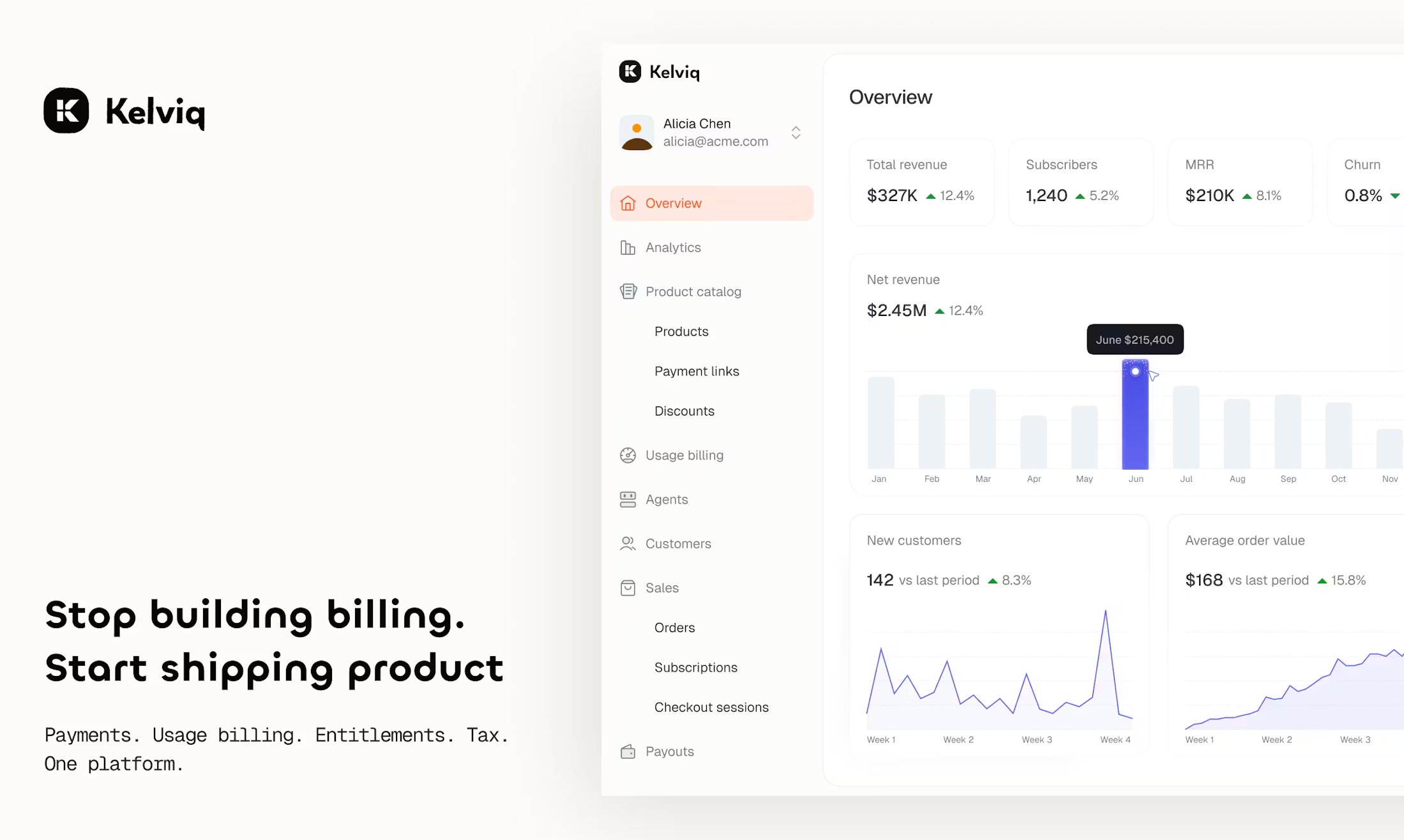
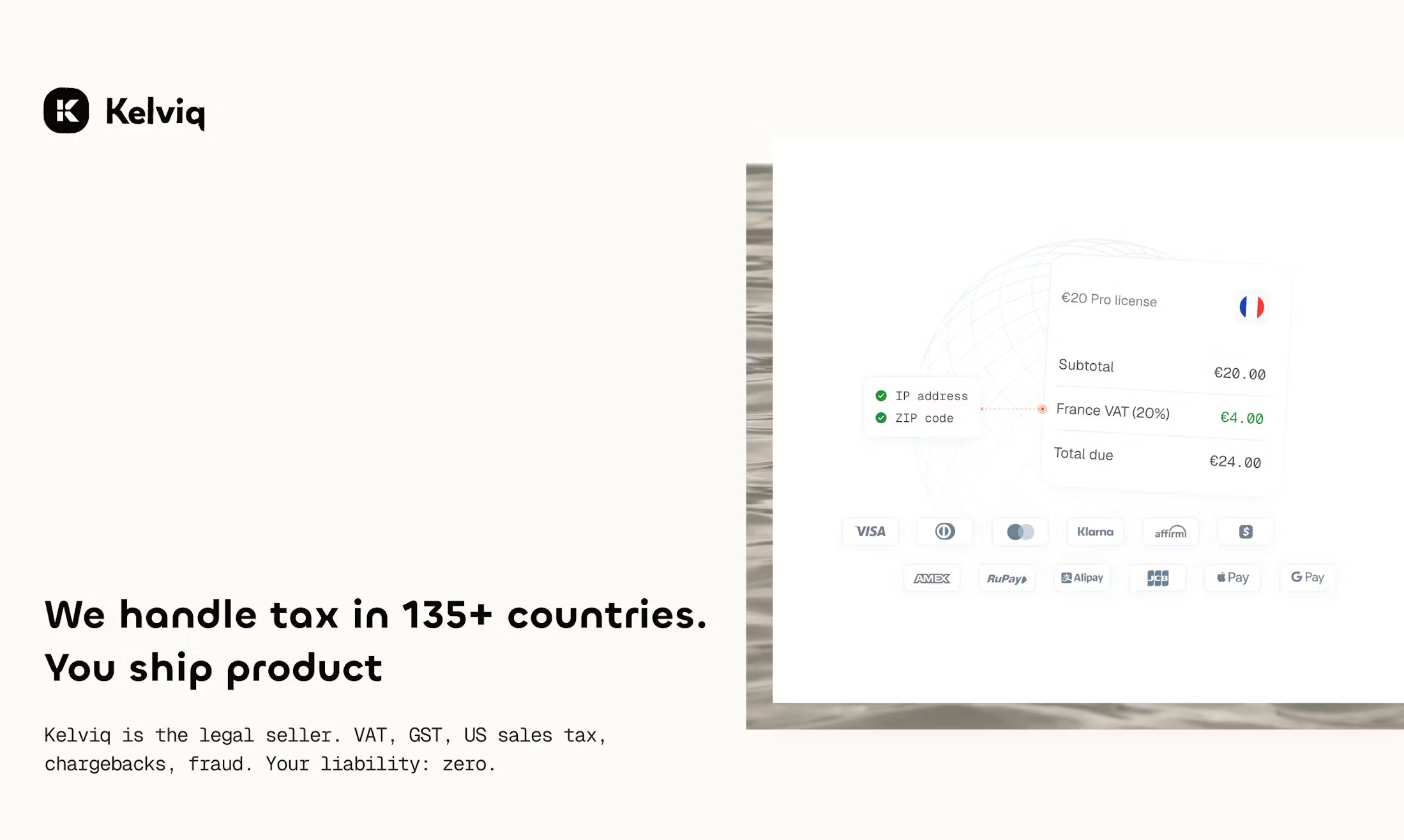
Kelviq (https://www.kelviq.com/) is commercialization and settlement infrastructure for SaaS, AI, and digital goods: it bundles hosted checkout, subscriptions and usage-based billing, entitlement gating, license keys and digital delivery, plus Merchant of Record (MoR)-style global tax and risk controls to cut multi-vendor stitching. Compared with payment-only or subscription-only stacks, it stresses event-level usage mapped to invoice lines and payment state synced to access. Costs are commonly percentage fees plus a per-transaction fixed charge. Responsibility boundaries, regional applicability, and current pricing belong to the latest on-site pages and legal terms.
Key Features
- Model flat fees, seats, usage tiers, credits, one-time charges, and hybrid plans in configuration
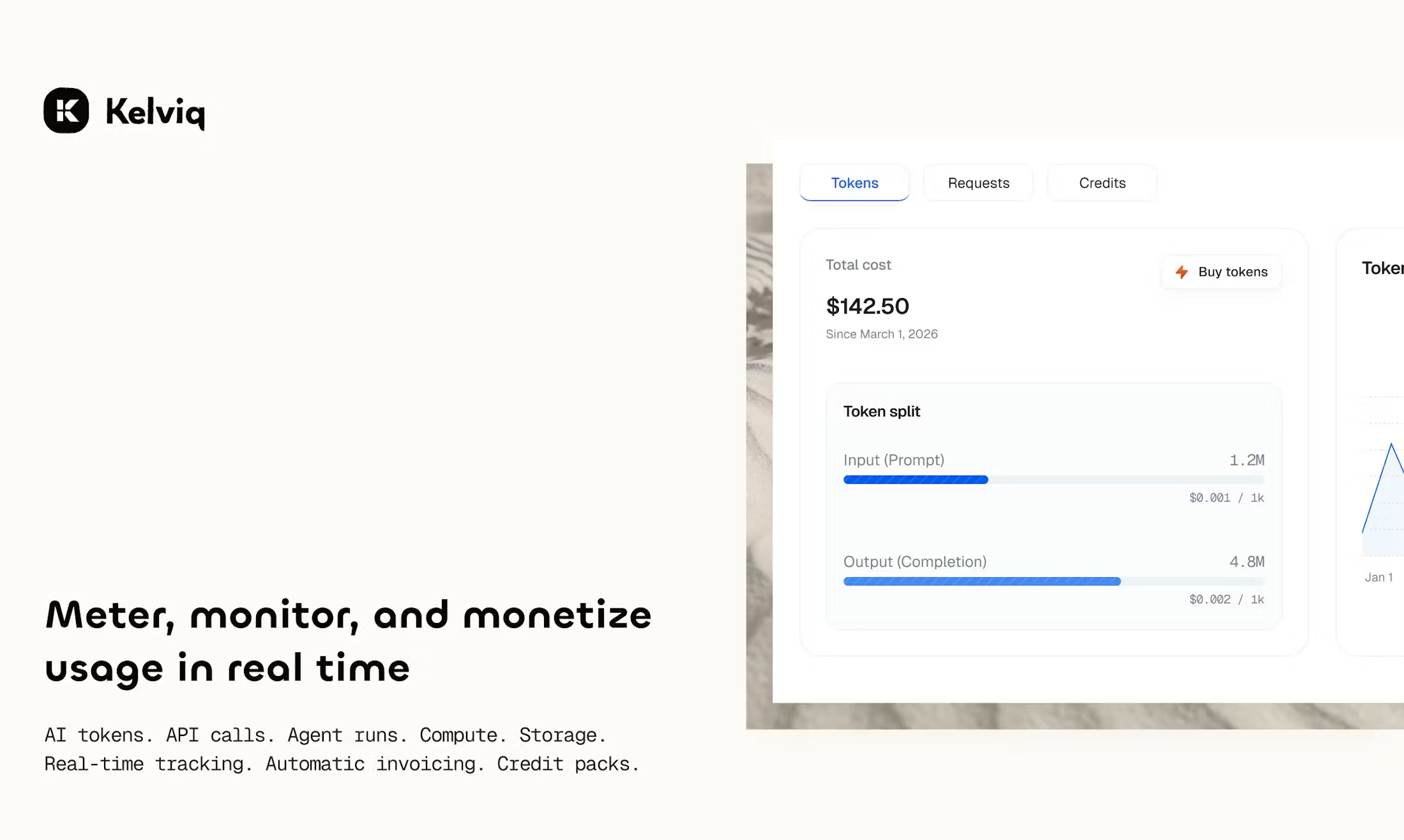
- Send discrete usage events for real-time metering tied to caps, overages, and invoice line items
- Offer hosted checkout and a customer portal for plan changes, payment methods, invoices, and usage history
- Bind plans to entitlements for feature gating, quota ceilings, and access checks
- Issue license keys and secure download links after payment, managing validity and renewals
- Ship TypeScript/React UI plus Node and Python SDKs to embed gating and metering in your app
Use Cases
- SaaS founders selling globally who want checkout, tax filing posture, and dispute handling largely handled under an MoR model instead of DIY compliance patchwork.
- AI product teams billing by tokens, API calls, or compute units who need metering events to roll straight into invoices and finance-ready detail.
- Teams selling digital goods or licenses who want automatic fulfillment of keys or download links right after a successful charge.
- Engineering leads who prefer hosted flows for upgrades, coupons, and plan changes to shrink bespoke billing consoles and support load.
Who is it for?
- Small and mid-sized teams that need subscriptions + usage + one-time charges together and want bills to track real consumption.
- Product and ops pairs collecting cross-border revenue who want less bespoke tax and filing process design.
- Developer teams aiming to keep feature flags, quotas, and paid state on one coherent data path.
- May not fit: merchants who only need a simple payment link with no usage metering, or large-scale businesses highly sensitive to per-transaction take rates where flat SaaS fees might dominate economics.
How It Compares to Similar Tools?
If you prioritize minimal “payments + subscriptions” integration, payment- or billing-only stacks are often lighter; if you prioritize metered revenue, entitlement gating, and MoR tax packaging, all-in-one platforms usually shrink integration surface area. Kelviq’s pricing page includes a comparison matrix with Stripe and Paddle—treat it as vendor marketing and still validate fee tiers, surcharges, payout timing, and contractual liability before procurement, not a single table alone.
Pricing Details
Excerpted from https://www.kelviq.com/pricing and related pages; amounts, thresholds, and surcharges are subject to the latest official pages:
- Transaction fees (tiered): 2.9% + $0.40 per transaction until $5,000 in cumulative processed volume, then 3.5% + $0.40 per transaction thereafter (the site clarifies the threshold is cumulative sales, not transaction count).
- Surcharges: the pricing FAQ lists +1.5% for non-US international cards and +0.5% on recurring subscription charges (applicability depends on the page and actual settlement).
- Other published points: no metering ingestion fees for API calls, unlimited seats, no sales gate on the standard plan; payouts are commonly described as T+7 rolling, with T+3 or custom schedules called out for enterprise partners.
FAQs
Q: Is Kelviq just a payment gateway?
A: It reads more like payments plus billing, metering, entitlements, and MoR-style tax positioning; if you only need card capture, the footprint can feel heavy.
Q: Why does pricing move from 2.9% to 3.5%?
A: After cumulative sales cross $5,000, later transactions use the higher rate tier; read the pricing FAQ for the exact threshold definition.
Q: Are there fixed fees on top of percentages?
A: The public stack includes a per-transaction fixed amount ($0.40); add possible international-card and subscription surcharges when modeling unit economics.
Q: What counts as a usage billing event?
A: The FAQ describes sending signals like a single token consumed, then aggregating into bills; field limits live in developer docs.
Q: How fast are payouts to my bank?
A: The common public line is T+7 rolling; enterprise contracts may differ—confirm in writing.
Q: Can I migrate customers from Stripe?
A: The pricing FAQ claims to


