
What website is this?
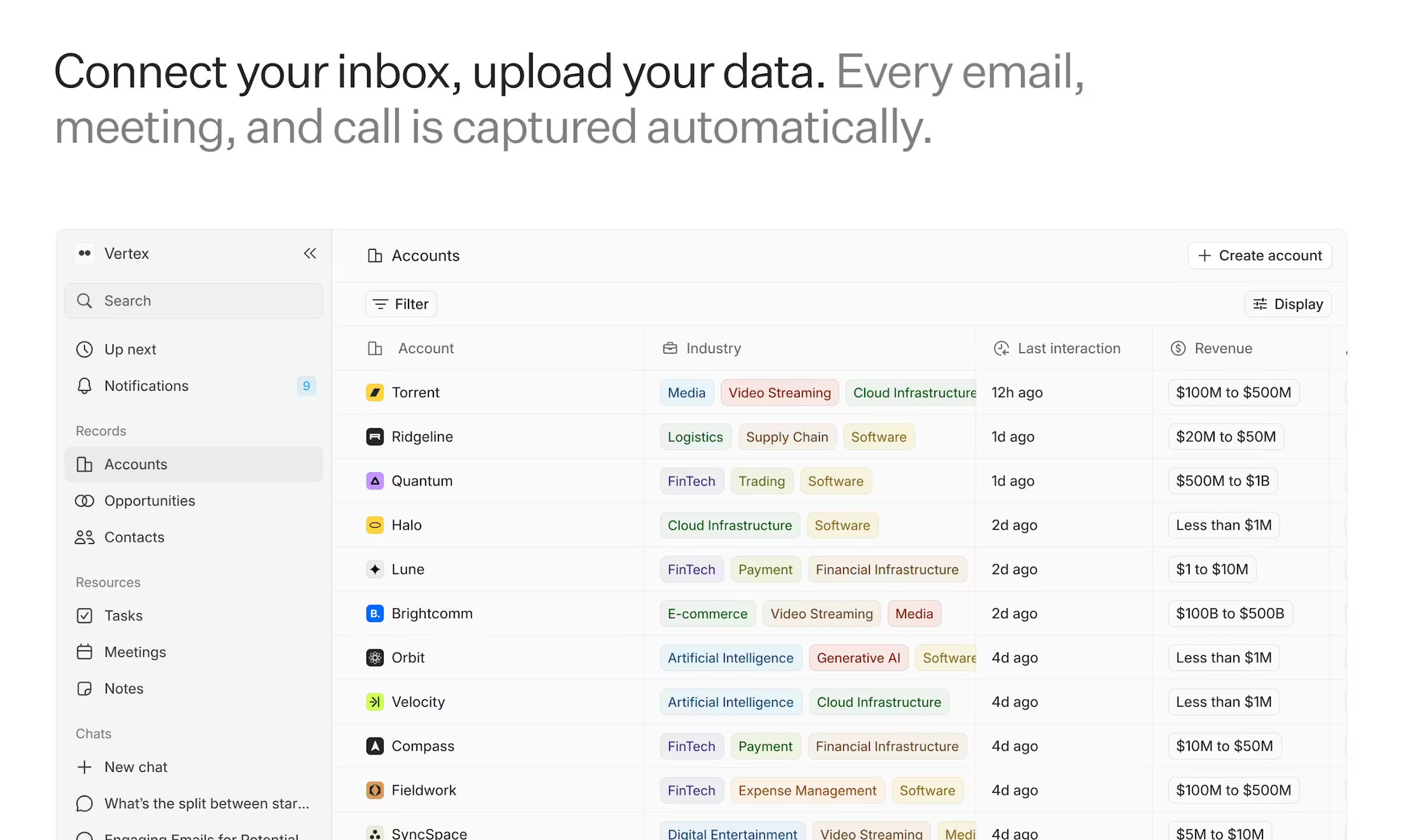
Lightfield is an AI CRM (AI-native customer relationship management) website designed to reduce repetitive work in logging, organizing, and follow-up for sales and customer teams. It emphasizes “complete customer memory,” combining emails, meeting records, and conversation data into usable context, then helping move next steps forward automatically. Compared with traditional CRMs that rely on manual field maintenance, it is better suited to teams that want to automate day-to-day customer operations.
Key Features
- Automatically consolidates emails and meetings into searchable customer context.
- Provides an end-to-end flow for meeting prep, recording/transcription, and summaries.
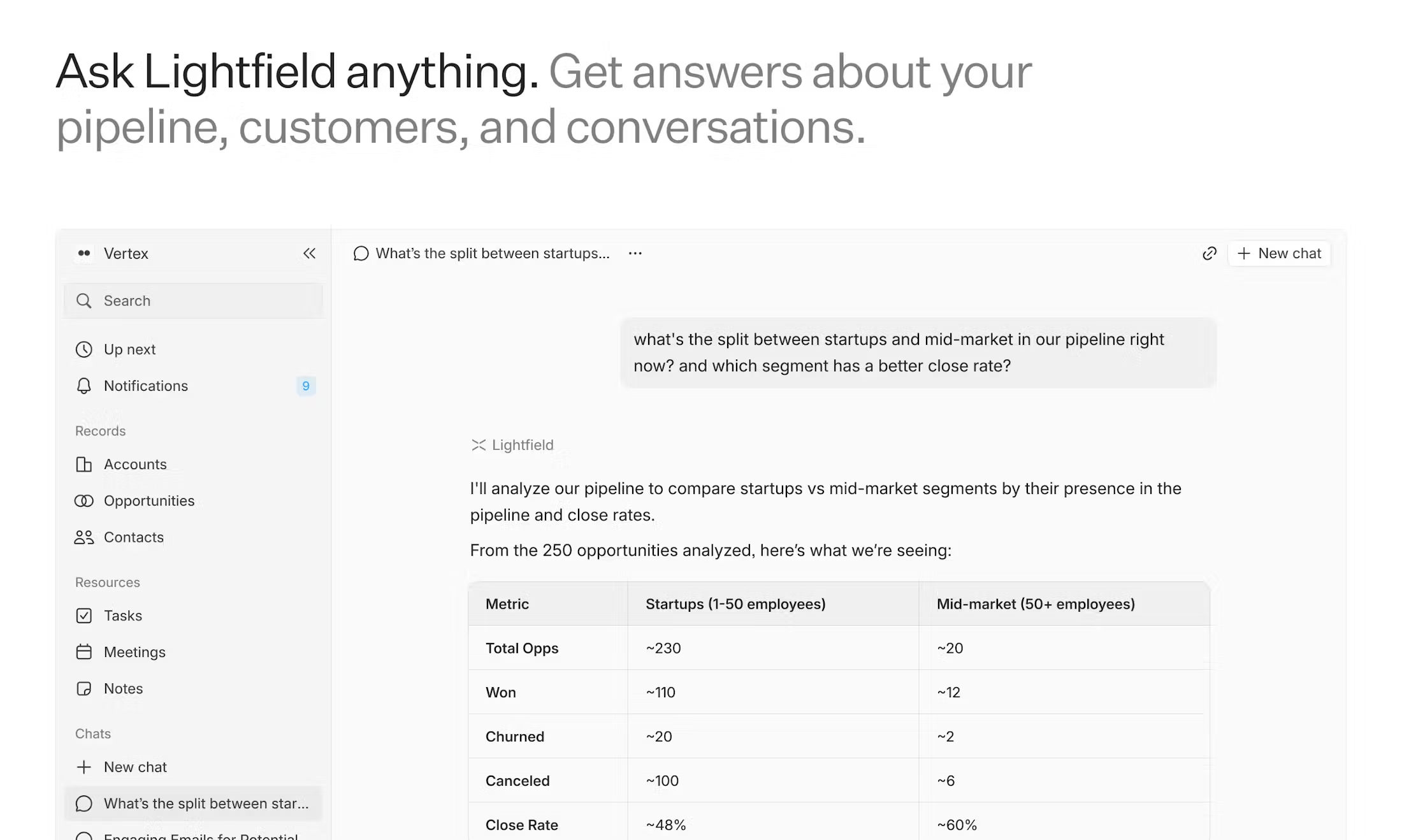
- Answers business questions from conversation evidence with traceable citations.
- Bulk updates pipeline stages, tags, and records from text plus structured fields.
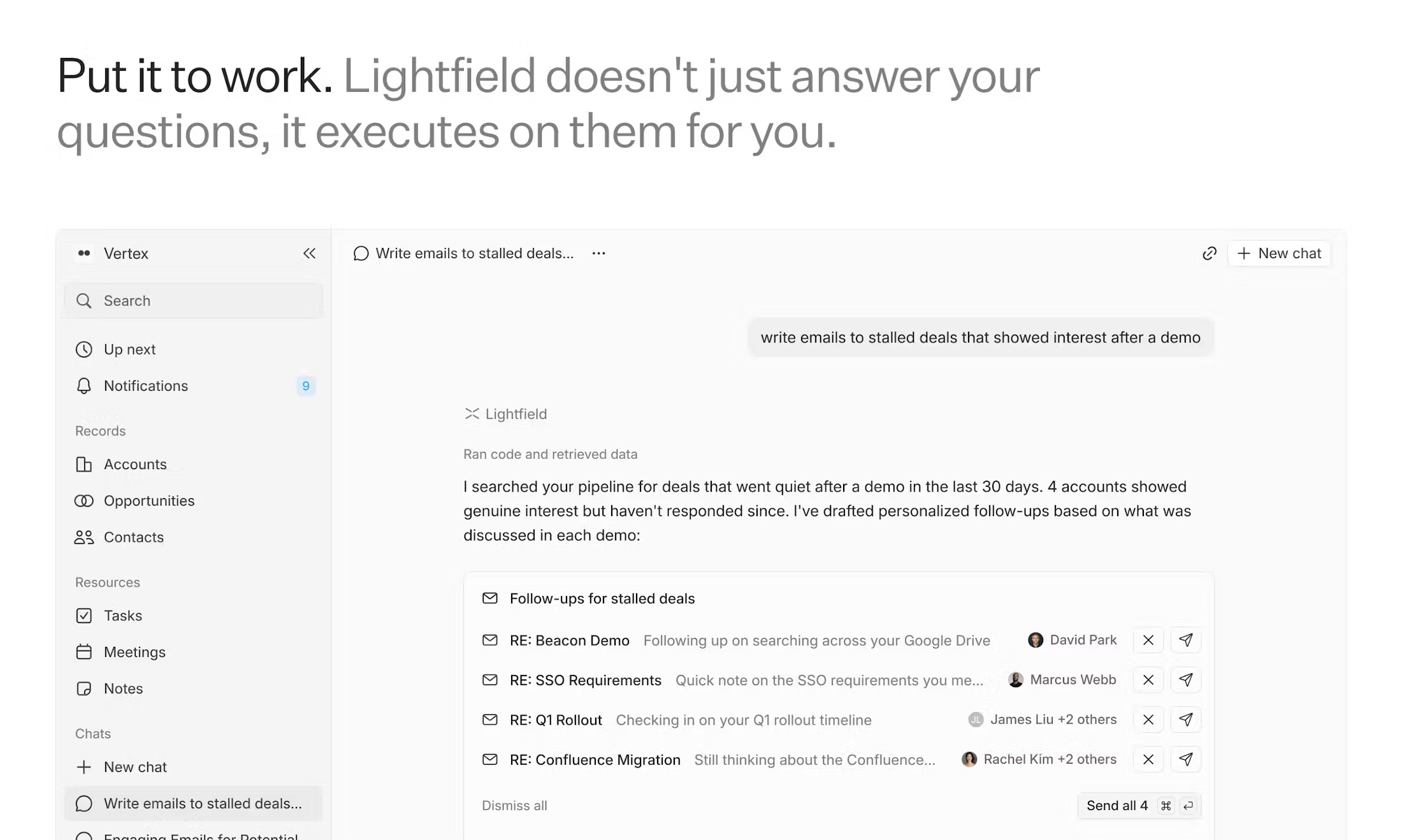
- Uses agents to draft personalized outreach and revive stalled opportunities.
- Offers API and MCP server support for integration into existing systems.
Use Cases
- Startup teams with frequent customer meetings use it to auto-capture conversations and reduce manual post-meeting updates.
- Sales leads use historical emails and call context before quarterly reviews to reprioritize accounts and next actions.
- GTM teams doing pipeline cleanup apply stage changes, tagging, and data backfill at scale based on real conversation signals.
- Product and engineering teams query which customers requested what and why, supporting roadmap decisions.
Who is it for?
- Early-to-growth teams with high communication volume and a need for unified customer memory.
- Sales organizations that want meetings, email signals, and CRM updates in one workflow.
- Technical teams that plan to extend automation through APIs, connectors, or MCP capabilities.
- Companies that want white-glove migration, onboarding, and ongoing support in higher tiers.
- Less suitable for individuals or very small teams needing only lightweight contact tracking.
How It Compares to Similar Tools?
Based on public site information, Lightfield leans toward conversation-context-driven CRM automation rather than heavy upfront schema design. If you care about using meeting/email semantics directly for querying, outreach, and bulk actions, this AI-native approach is often a stronger fit. If you prioritize fixed templates and minimal AI involvement, traditional rule-based CRMs may feel more predictable. Practical evaluation points include automation depth, context traceability, and migration/governance support.
Pricing Details
According to the official Pricing page, Lightfield has three tiers:
- Startup:
$79/user/month, billed monthly, including core CRM, call intelligence, automated enrichment, and unlimited agent queries/actions. - Pro:
$199/user/month, billed annually, with higher record/workflow limits, advanced permissions, and dedicated support. - Growth: Custom quote, billed annually, aimed at larger-scale automation and high-touch support.
Public pricing information also shows tiered differences in record limits, workflow events, and API rate limits. Feature availability and limits should be confirmed on the latest official pages.
FAQs
Q: Do I need to define many fields before getting started with Lightfield?
A: The site describes a schema-less foundation, which suggests teams can start by capturing context and evolve the data model over time.
Q: What is the core difference from a traditional CRM?
A: The main difference is using email/meeting conversation semantics for Q&A, updates, and outreach, not only manual field upkeep.
Q: Can it be used for meeting capture and post-meeting summaries?
A: Yes. The product pages mention meeting prep, recording/transcription, summaries, and call intelligence as connected capabilities.
Q: Does it support bulk updates for pipeline and records?
A: Yes. It highlights bulk editing and conversation-driven record updates, useful for stage reassignment and segmentation tasks.
Q: Are integrations available for existing systems?
A: The site and changelog reference REST API, connectors, and MCP server support for teams with integration requirements.
Q: Are all prices publicly listed?
A: Startup and Pro show public unit pricing, while Growth is custom-quoted. Final scope and limits depend on the latest official pricing page.
Q: What company size is it for?
A: The positioning covers teams from inception to growth stage; organizations needing deeper support may evaluate Pro or Growth first.
Why We Recommend
It turns customer memory into an operational layer, not just a static database. For teams with meeting-heavy and multi-step follow-up cycles, context-driven execution can make automation more practical. Compared with tools focused mainly on field maintenance, Lightfield stands out on semantic traceability and action linkage.


