
What website is this?
Logic is a spec-driven agent platform for teams, built around a simple model: write a spec, then ship an Agent API. You define inputs, outputs, and behavior in plain language, and the platform turns that spec into callable endpoints with testing, versioning, and runtime visibility. It is a practical fit for teams that want production AI workflows without assembling orchestration and evaluation infrastructure from scratch.
Key Features
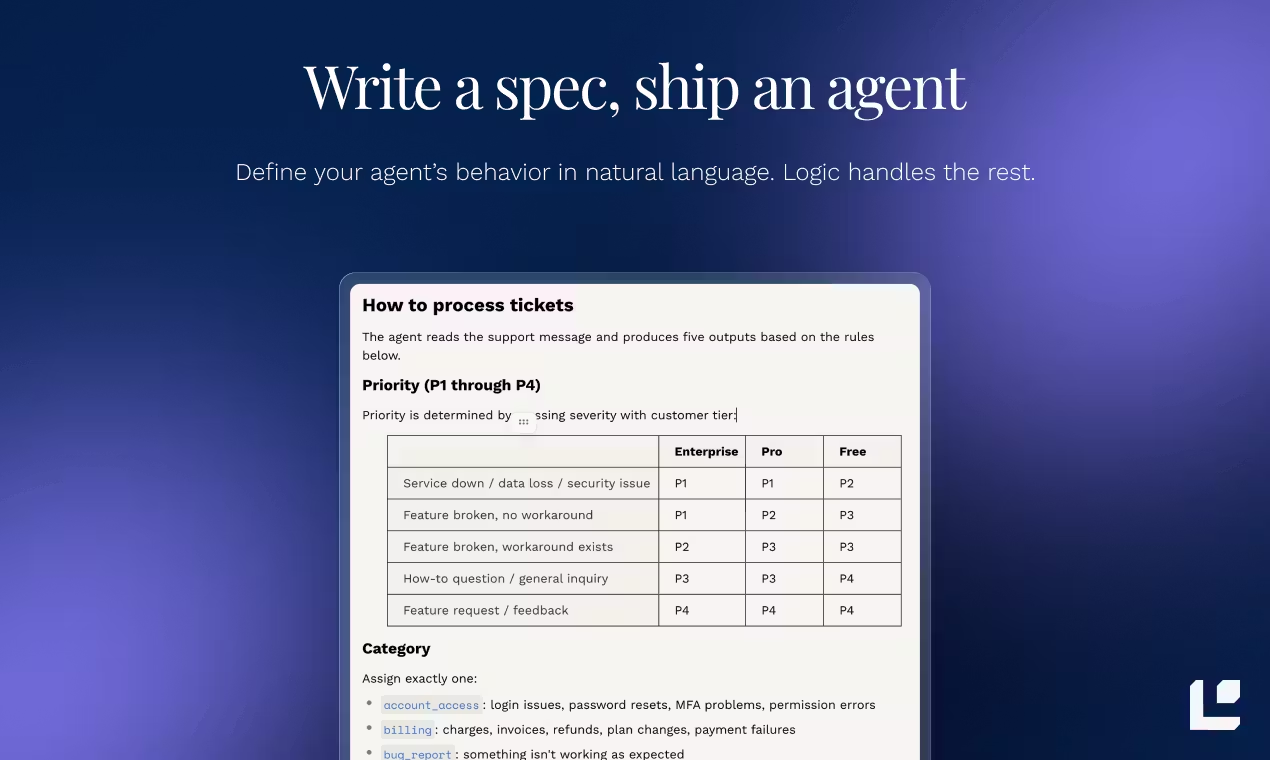
- Define Agent behavior, inputs, and outputs through natural-language specs.
- Run built-in test cases and regression checks before shipping changes.
- Track spec diffs, roll back safely, and pin immutable versions.
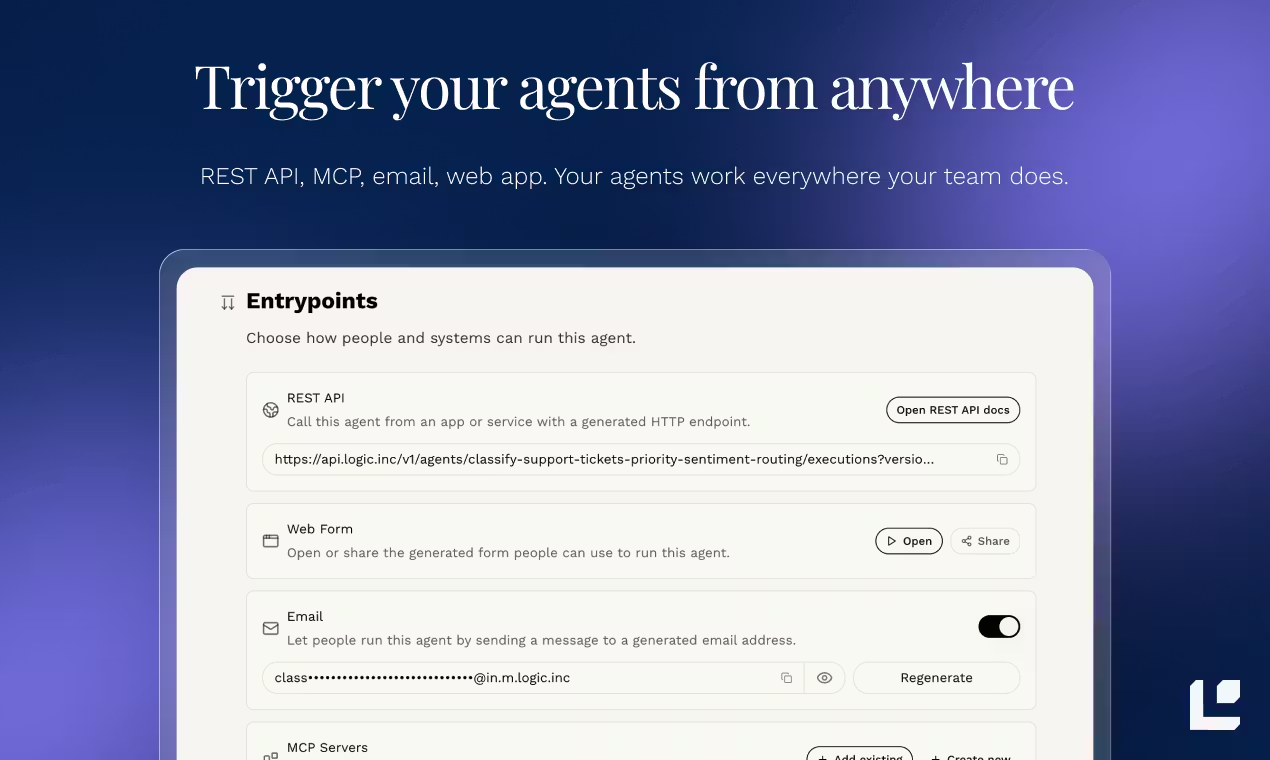
- Expose Agents as typed REST APIs with a shareable web interface.
- Route requests across multiple model providers with automatic failover.
- Log inputs, outputs, latency, and errors for execution-level debugging.
Use Cases
- Operations or moderation teams use it during listing surges to review product content at scale and reduce manual first-pass screening time.
- Finance and procurement teams use it to extract structured fields from invoices and purchase orders for reconciliation and exception checks.
- Support teams use it when ticket queues grow, classifying urgency, sentiment, and category while suggesting relevant help articles.
- Recruiting teams use it in hiring bursts to score resumes against role requirements with reviewable reasoning.
Who is it for?
- Product and engineering teams that need to ship AI tasks as APIs quickly.
- Organizations where business users edit logic while engineering keeps release controls.
- Teams that want testing, versioning, and observability in one platform.
- Groups needing stable multi-model routing without maintaining custom infra.
- Not ideal for individuals running one-off prompt experiments without deployment or governance needs.
How It Compares to Similar Tools?
Logic is closer to an end-to-end delivery layer from specification to production API, rather than a single-point tool focused only on prompting or only on observability. If your priority is turning agents into callable APIs with testing, version control, and execution tracking in one workflow, it offers a more direct path. If you need deep custom orchestration, a fully self-built stack, or only one isolated capability, a modular toolchain may be more flexible.
Pricing Details
The pricing page lists four tiers: Free, Pro, Scale, and Enterprise. Free is $0 with up to 5 agents, 10 MB storage, and 7-day log retention; Pro is $49/month with 70M monthly tokens, 1 GB storage, and 30-day logs; Scale is $299/month with 430M monthly tokens, 25 GB storage, and 90-day logs; Enterprise is custom pricing. The page also shows Pro/Scale overage reference pricing at about $1 per 1.4M tokens, and actual billing terms should be confirmed on the latest official pricing page.
FAQs
Q: What infrastructure work does Logic replace most directly?
A: Based on the site, it combines spec authoring, testing, version control, API exposure, and runtime observability in one place, reducing cross-tool integration overhead.
Q: Do I need to write code before I can deploy an agent?
A: Not necessarily. Its primary workflow is spec-first, then deployment. In production environments, teams can still integrate via API into existing systems and release processes.
Q: Which model providers does it support?
A: The website states routing support across providers such as OpenAI, Anthropic, Google, and Perplexity, with model selection by task complexity and automatic failover.
Q: Will spec changes break production behavior?
A: The platform highlights diffing, rollback, and version pinning, plus test workflows to reduce change risk. Teams should still align rollout controls with their own approval and monitoring practices.
Q: Can non-engineers participate in maintaining agent logic?
A: Yes. The site mentions approval workflows that let non-technical users update specs while engineering retains controlled release and version practices.
Q: Is pricing seat-based or usage-based?
A: The pricing page positions billing as usage-based rather than seat-based, with token, storage, and retention limits by tier. Overage and enterprise terms should be checked on the official page at purchase time.
Q: Does it include enterprise compliance and reliability commitments?
A: The site presents SOC 2 Type II, HIPAA-related support details, and a 99.9% uptime SLA. For regulated workloads, contract-level confirmation is still recommended.
Why We Recommend
From a navigation-site perspective, Logic stands out by connecting plain-language specs directly to production-ready APIs, with testing, versioning, and observability built into the same path. For teams trying to shorten AI delivery cycles without maintaining multiple infrastructure layers, this integrated approach can reduce implementation and coordination overhead.


