
What website is this?
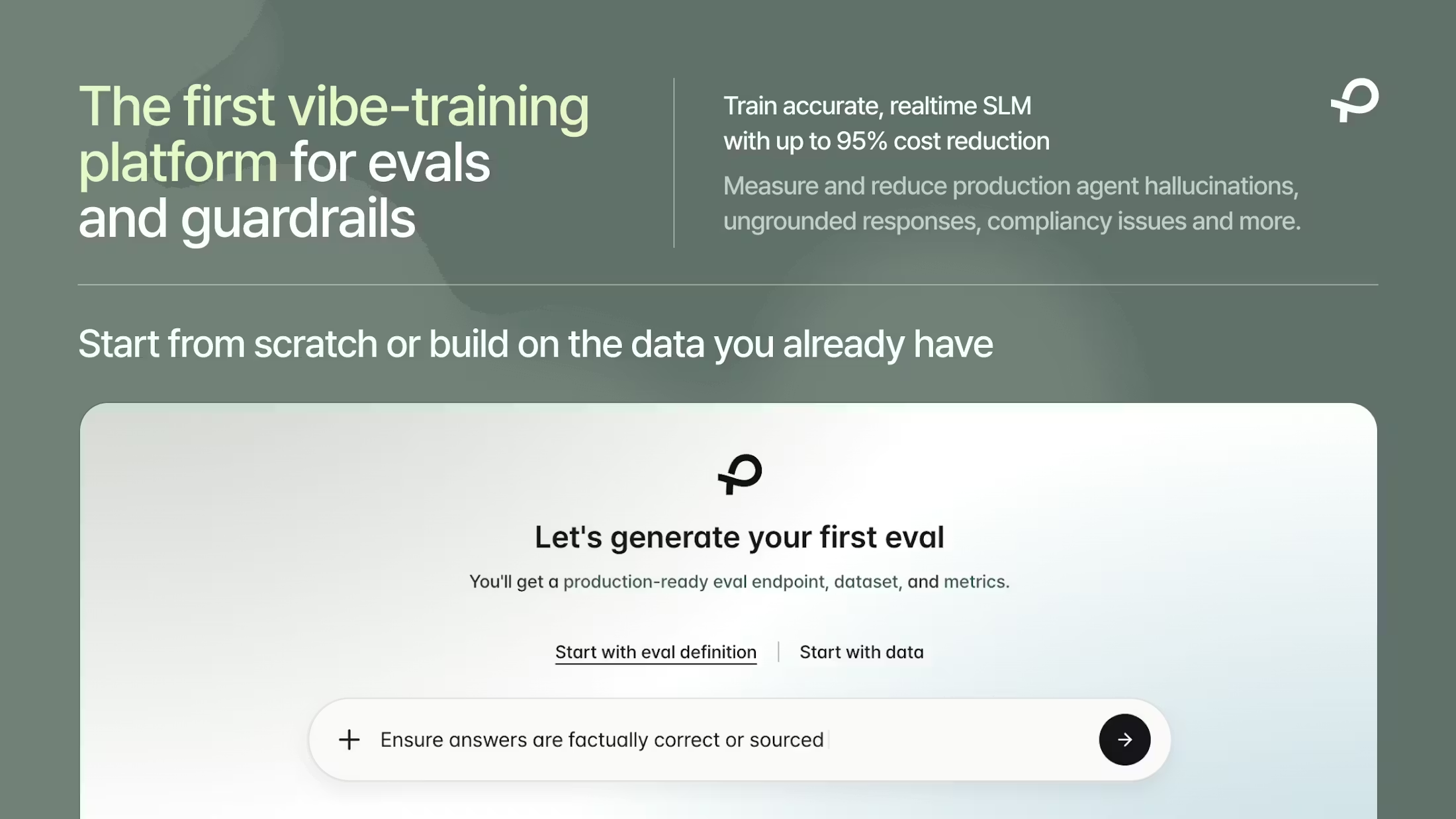
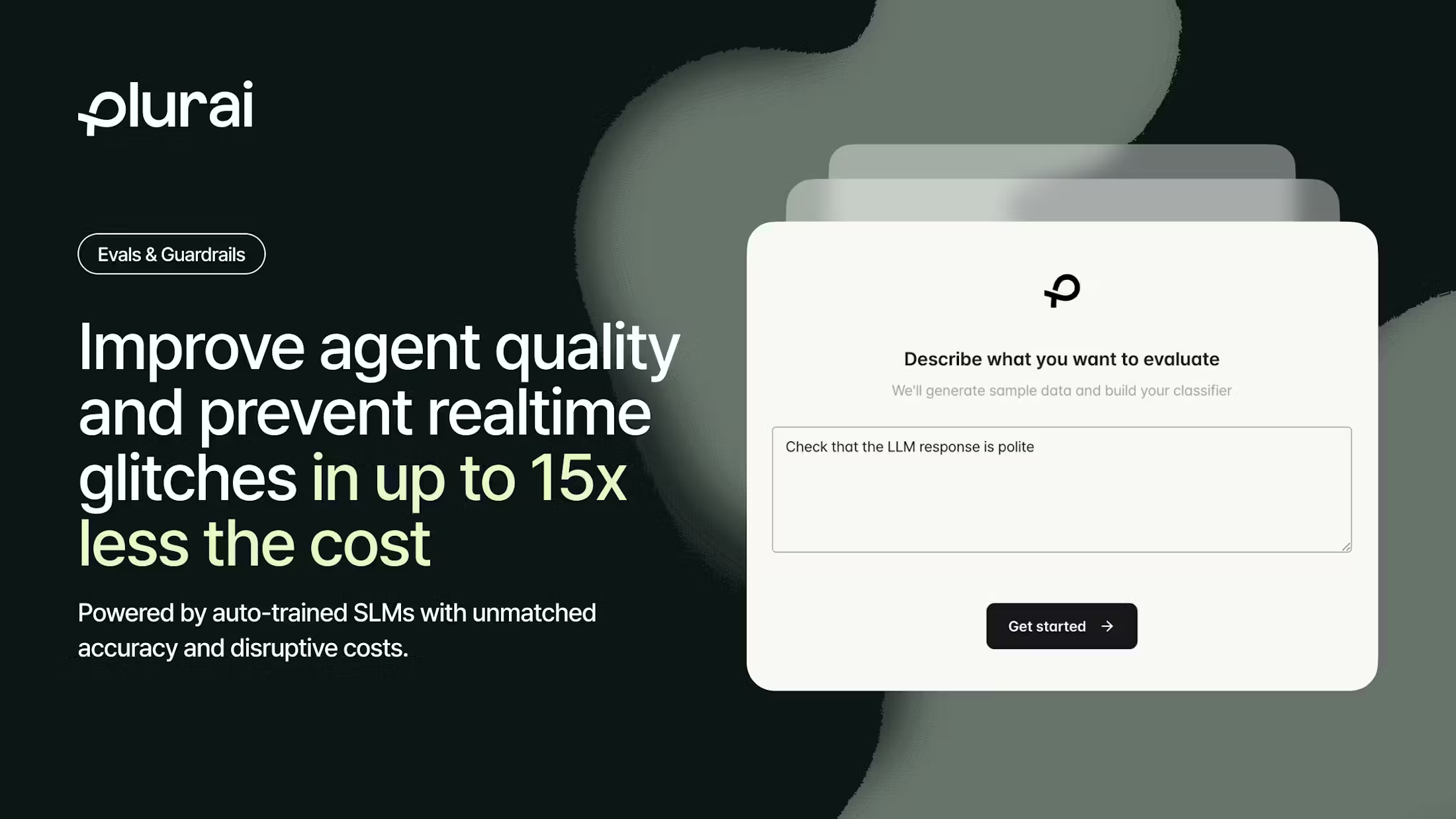
Plurai (https://www.plurai.ai/) is a product-oriented site for AI agents: it turns interactions that resemble real-world use into repeatable tests and online gates. Think of it as a pipeline built around simulation, evals, and guardrails—first expand hard cases and multi-turn paths with synthetic scenarios, then score and regress with evaluation models, and finally enforce business policies and safety boundaries in the inference path via blocking or rewriting. The positioning leans toward production risk control and continuous regression, not one-off manual spot checks or dashboards-only observability.
Key Features
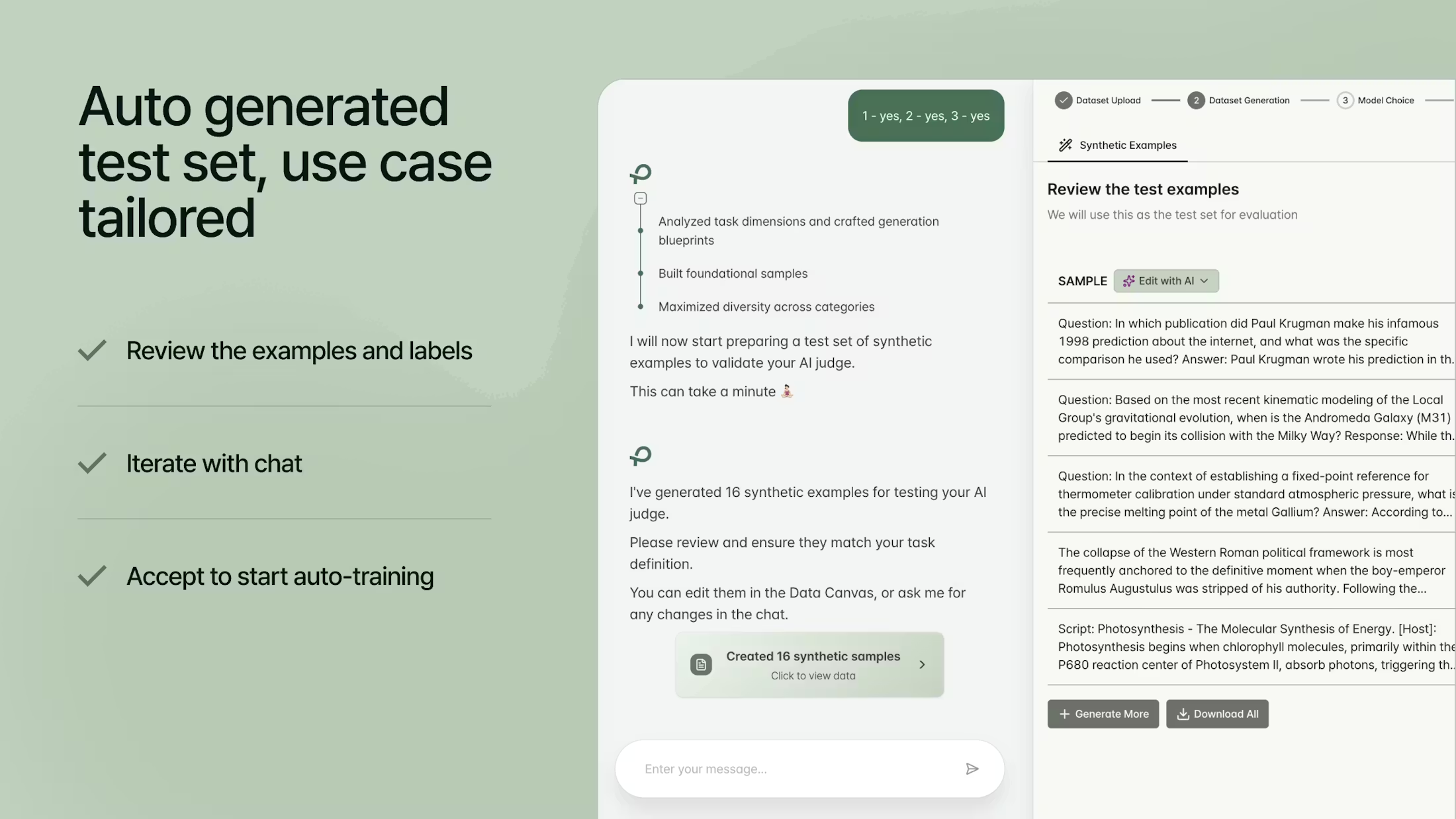
- Synthetic scenarios and multi-turn simulation to cover edge cases and more realistic interaction paths
- Production-oriented evals: scoring, regression, and version comparisons using small/specialized evaluation models
- Guardrails: mapping policies and safety rules to low-latency online blocking or rewriting
- CI/CD hooks for evaluation and validation: trigger regressions on changes instead of “shipping on vibes”
- Evaluation and scenario construction for voice, documents, and other multimodal settings (scope per the official site)
Use Cases
- Owners of customer-facing or sales agents validating policy-compliant wording and refusal boundaries before launch, and blocking high-risk outputs before they reach end users.
- Engineering and QA teams turning evaluation sets and regression tasks into a repeatable pipeline tied to release cadence.
- Security and compliance stakeholders who need rules that execute and can be reviewed—not only post-hoc chat sampling.
- Teams sensitive to inference cost and latency comparing “generic LLM judging loops” vs “specialized eval/guardrail inference” (the pricing page shows illustrative comparisons).
- Organizations needing private deployment and enterprise SSO evaluating feasibility against Enterprise-tier deployment and support items.
Who is it for?
- Teams already deploying or planning to deploy LLM agents in external business flows and wanting controlled rollout risk.
- Engineering organizations that want to quantify policy consistency, failure modes, and regression gates.
- Teams that need guardrails within acceptable latency and are willing to adopt third-party evaluation infrastructure.
- May not be a fit: small prototypes that only need offline one-off evaluation with no online blocking mandate, or setups that will not adopt this class of eval/guardrail services.
How It Compares to Similar Tools?
If your primary need is traces/logs/top-level metrics, observability-focused tools are often more direct; Plurai emphasizes simulated evaluation data + evaluation models + guardrails to answer whether “this interaction class will fail in production” and whether “rules can be enforced upfront.” If you mainly want templated survey-style evaluations or a human labeling platform, the workflow may diverge. Validate with a POC against your release process and rely on each vendor’s latest feature pages.
Pricing Details
The official pricing page is organized by product line (e.g., Evals, Guardrails, Simulation). Starter/Free is advertised as trial-friendly without a credit card, with starter quotas (tokens, a dedicated endpoint, downloadable synthetic evaluation sets, etc.). Pay-as-you-go tiers include Plurai SLMs and Optimized LLM options; the site shows examples such as $0.15 / 1M tokens and $0.30 / 1M tokens; different sections may present tokens vs requests comparisons—check the metering unit carefully. Enterprise lists on-premises deployment, enterprise SSO, customized inference pricing and SLA, broader SLM use cases, and premium support. Treat the latest pricing page and checkout/billing notes as authoritative (regions, taxes, and quota changes are not asserted here).
FAQs
Q: Is Plurai an observability platform?
A: It is closer to evaluation, simulation, and guardrail execution combined; whether full observability is included depends on the official feature description.
Q: Does the free trial require a payment method?
A: The Starter tier is described as not requiring a credit card; signup steps and quotas follow the site and account console.
Q: Can it be deployed on-premises?
A: Enterprise mentions on-prem items; scope and boundaries should be confirmed via official sales/support channels.
Q: What latency should I expect for guardrails?
A: Product and pricing pages cite <100ms-class figures; real-world performance depends on deployment topology and load.
Q: How does this compare to using a general model as a judge (LLM-as-a-judge)?
A: The site frames trade-offs around specialized eval/guardrail models for cost and latency; adoption depends on accuracy targets and budget.
Q: Is it suitable for individual developers?
A: A free tier exists for trials;


